• linkedin
  • instagram
sluiten openen
  • VELARIUM
    VELARIUM -

    Lightness, Form & Connection

  • VELARIUM
    VELARIUM -

    Lightness, Form & Connection

  • VELARIUM
    VELARIUM -

    Lightness, Form & Connection

  • VELARIUM
    VELARIUM -

    Lightness, Form & Connection

  • VELARIUM
    VELARIUM -

    Lightness, Form & Connection

  • VELARIUM
    VELARIUM -

    Lightness, Form & Connection

  • VELARIUM
    VELARIUM -

    Lightness, Form & Connection

  • VELARIUM
    VELARIUM -

    Lightness, Form & Connection

  • VELARIUM
    VELARIUM -

    Lightness, Form & Connection

  • VELARIUM
    VELARIUM -

    Lightness, Form & Connection

VELARIUM

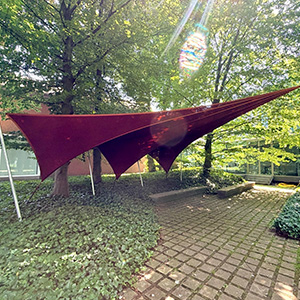
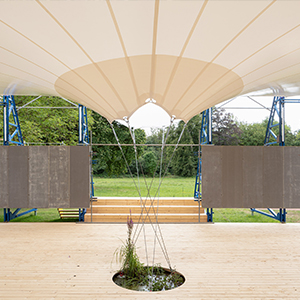
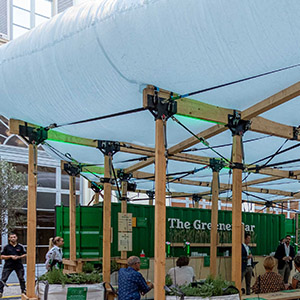
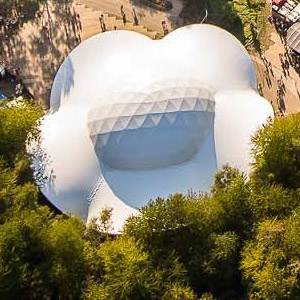
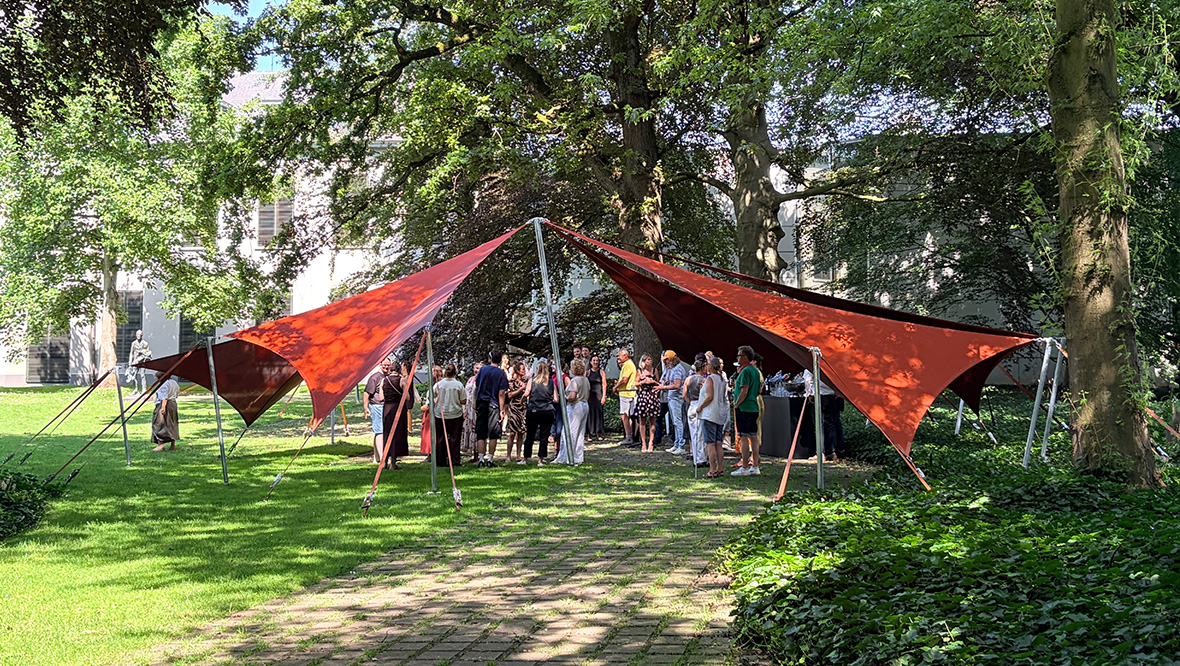
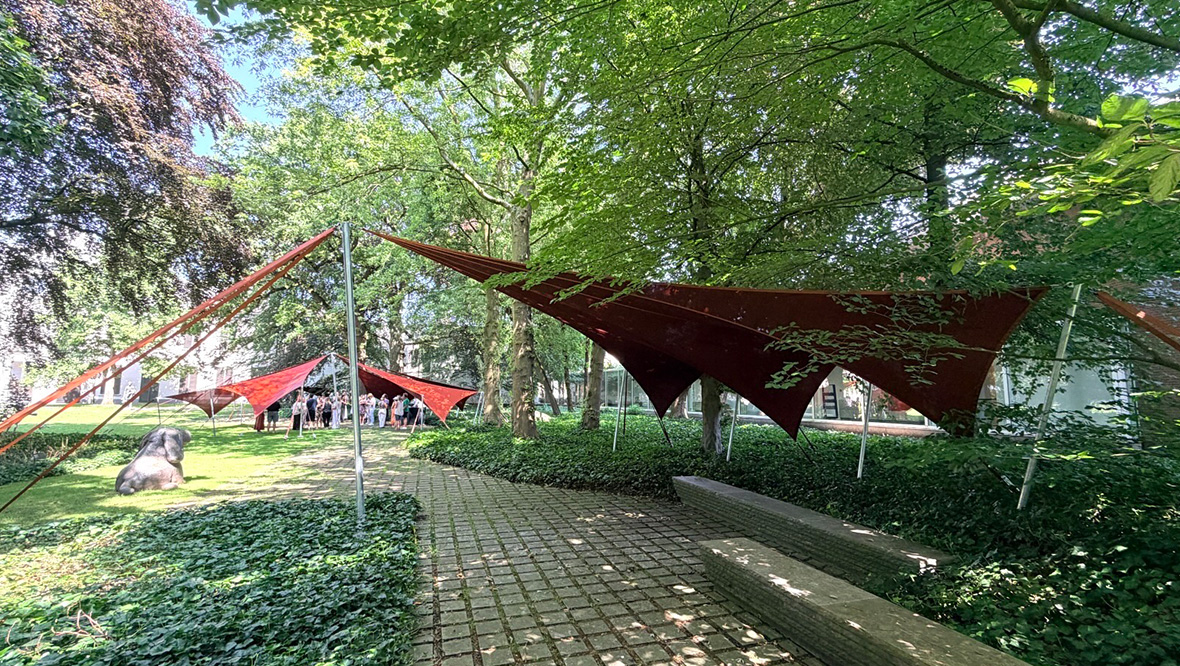
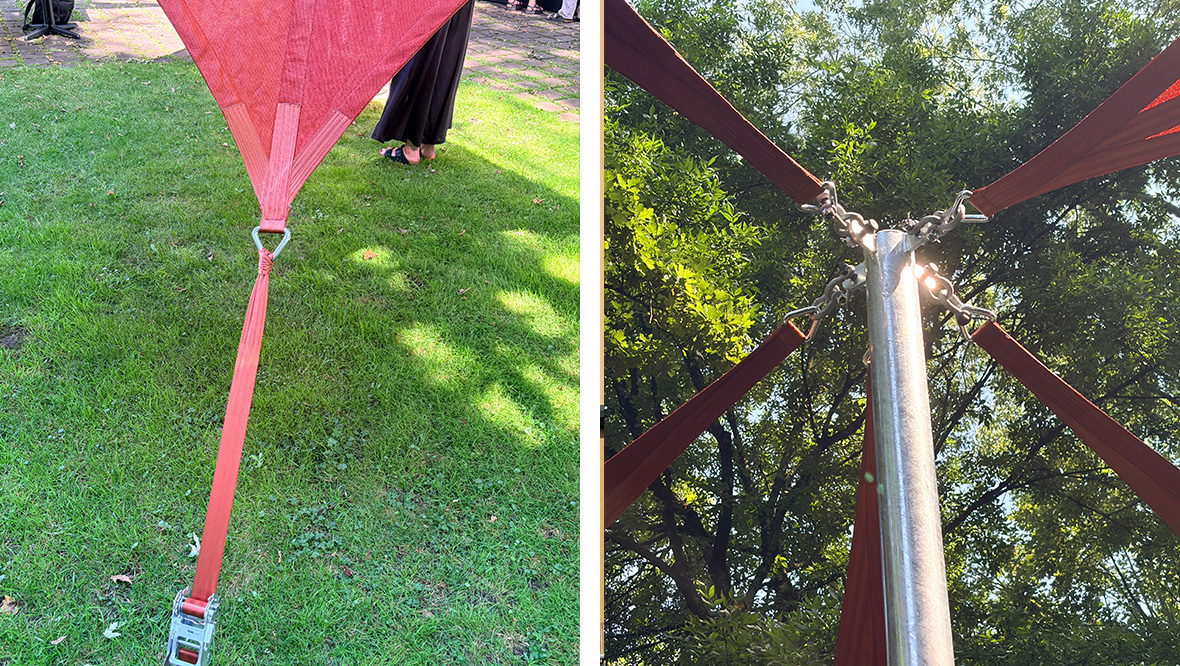
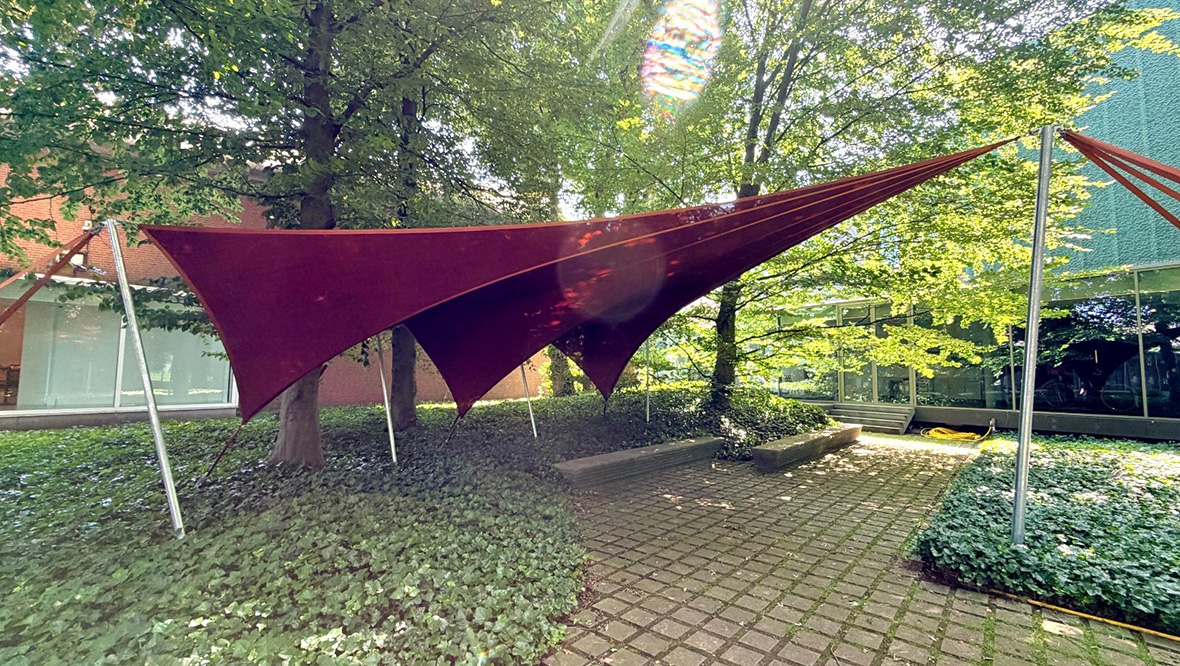
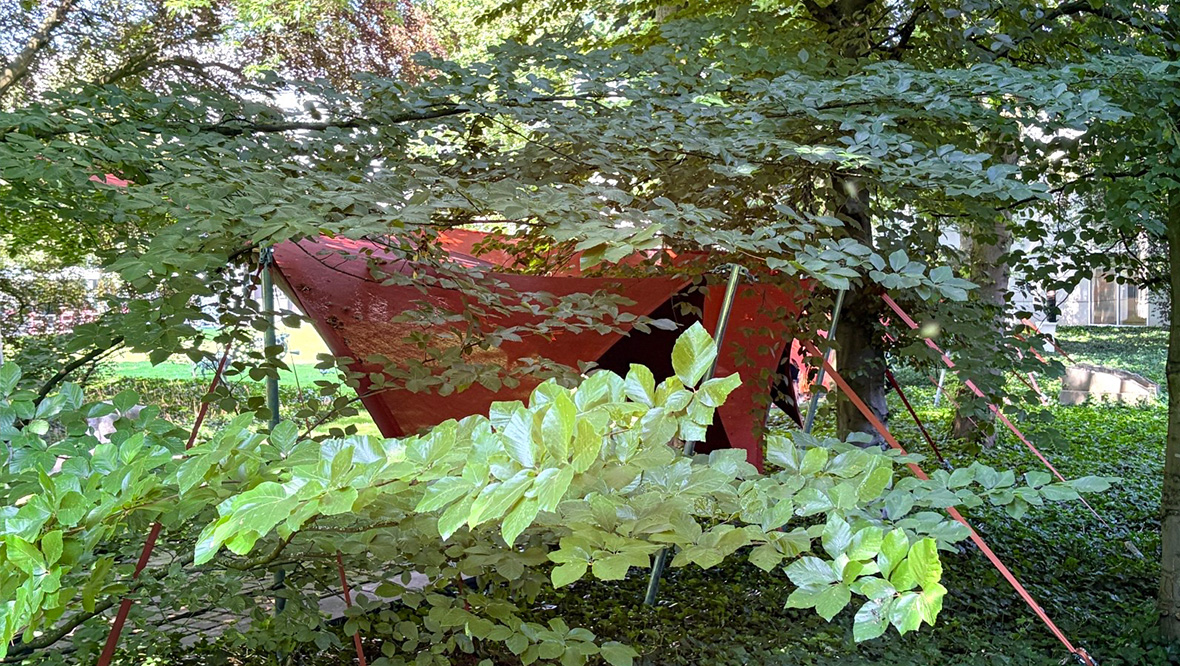
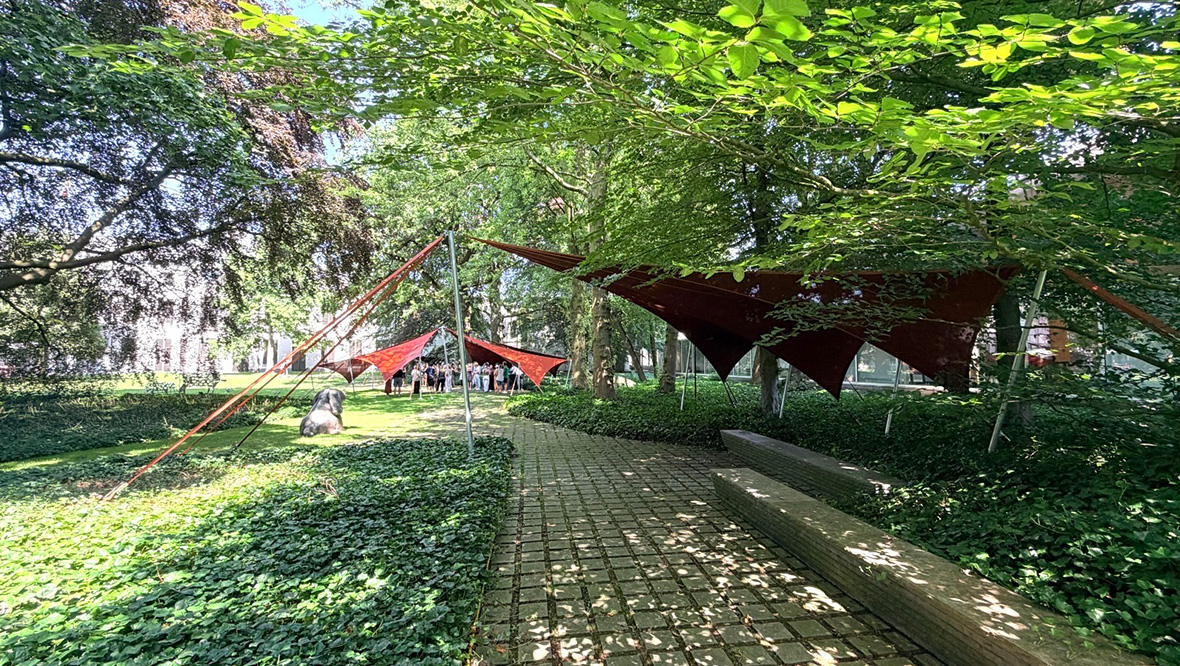
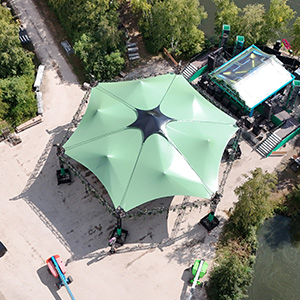
As part of the long-term architectural programme Transit at Het Noordbrabants Museum in ’s-Hertogenbosch, architects Nika van Berkel en Juliette Gilson designed Velarium: a folly that gives new meaning to the museum garden.
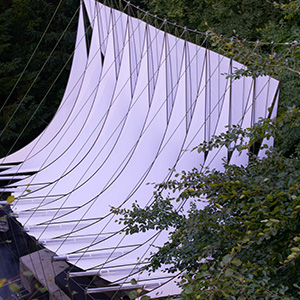
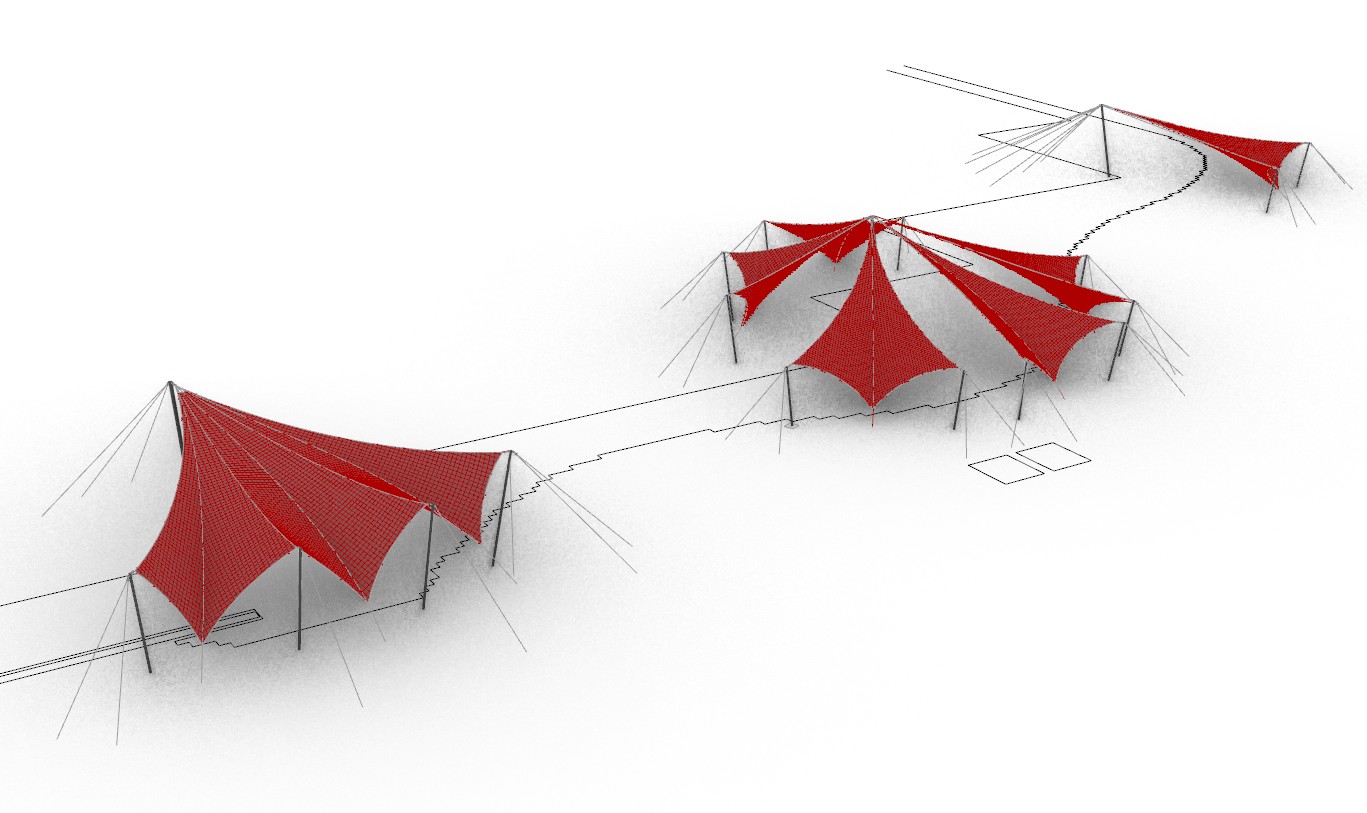
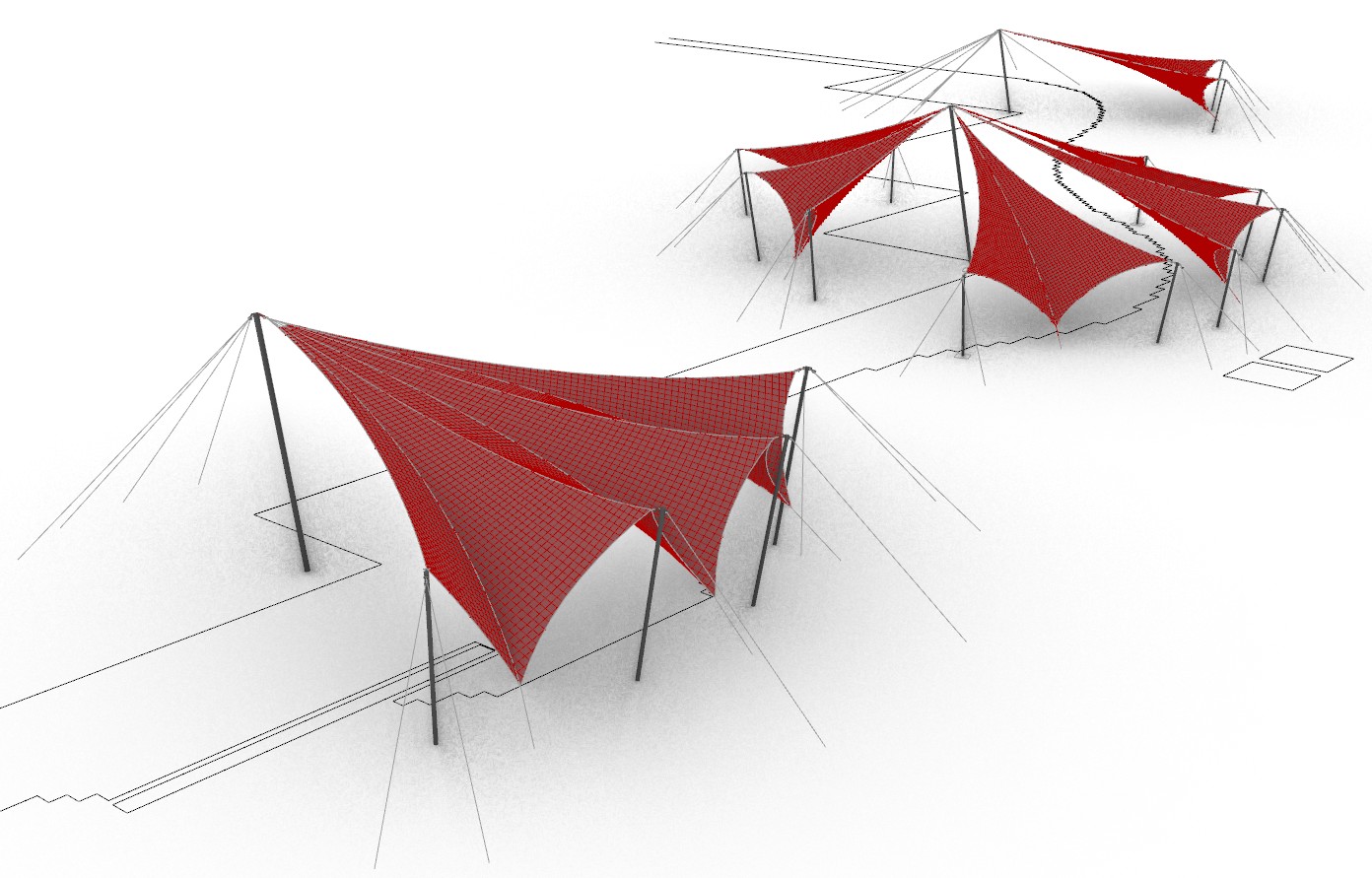
The design consists of three canopies that invite visitors to take a different route through the garden, slow down and reconsider the relationship between inside and outside, building and garden.

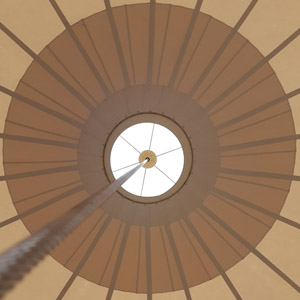
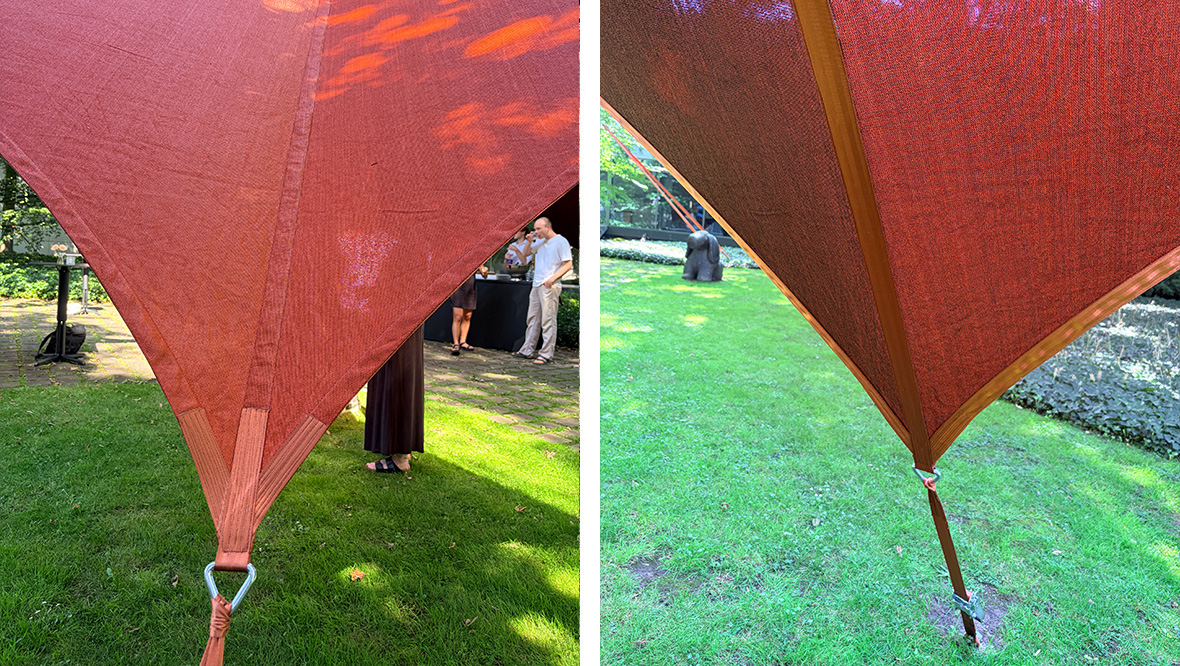
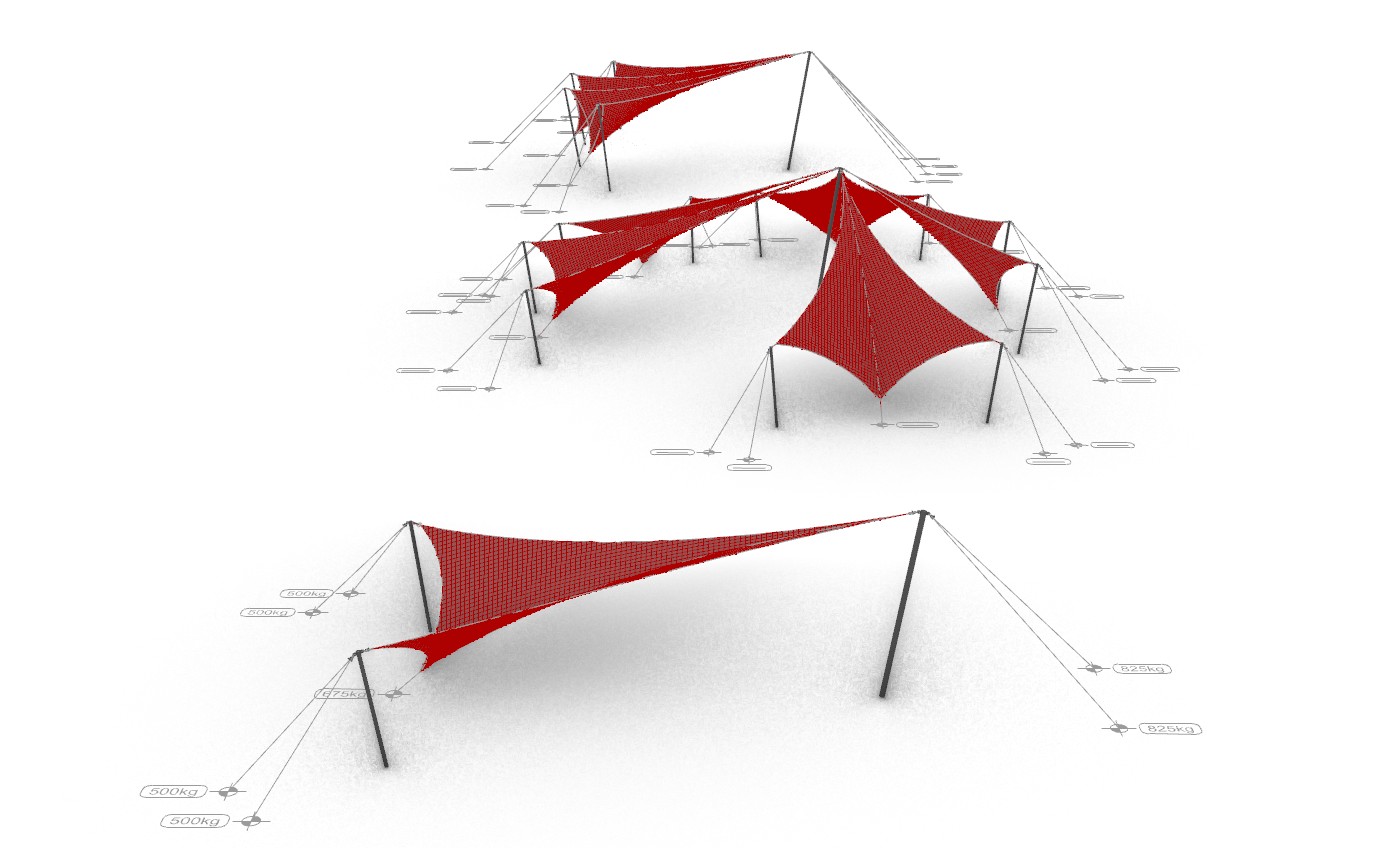
Tentech was responsible for the structural engineering and technical development of the three canopy structures. We determined and dimensioned the final forms, developed the cutting patterns for the fabric structures and carried out the structural calculations. The technical detailing of the fabric attachment and edge reinforcement was also developed, including prestressed PES straps along the ridge and valley lines and the edges of the fabric.

For the realisation of the fabric structures, we collaborated with EPIC· Creations and artist Johannes Offerhaus of Zelt.studio. By bringing together these different areas of expertise, the architectural design could be translated into a lightweight, functional and distinctive structure.

Velarium has become a distinctive addition to the museum garden of Het Noordbrabants Museum in ’s-Hertogenbosch, inviting visitors to experience the space in a different way.

Pictures: Tentech BV
Specifications

Customer:
Noordbrabants Museum
Client:
Noordbrabants Museum
Architect:
Nika van Berkel & Juliette Gilson
Suppliers:
EPIC· Creations, Zelt.studio
Year:
2026
Services:
Structural engineering and technical development of the three canopy forms, design support, structural analysis and cutting patterns
Materials:
ShadowMesh
Surface:
109 m2

Festivals and events projects

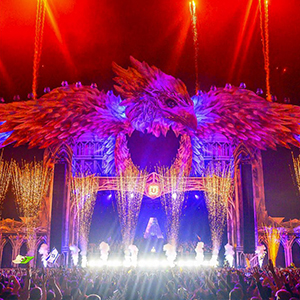
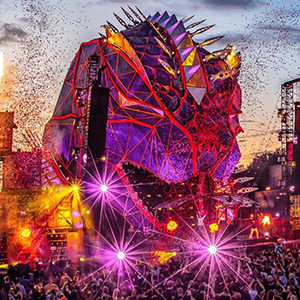
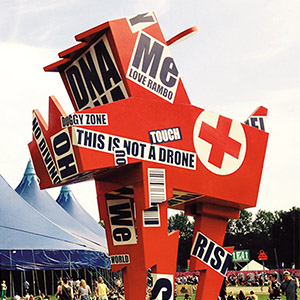
Whether you will come across them at a dance event, product launch, the Floriade or the Volvo Ocean race, structures designed by Tentech are used for events all over the world, such as demountable pavilions, tents and temporary covers. We strive for an integrated design of structural and architectural elements; merging the demountable character and aesthetic quality of the object.

Worldwide assistance

Travelling structures should be used safely while exposed to various conditions. We ensure that our clients can erect their demountable tents or pavilions anywhere in the world. For this purpose, we apply our knowledge on international codes and regulations and – if desired – guide our clients in their communication with local authorities.

Modular building systems

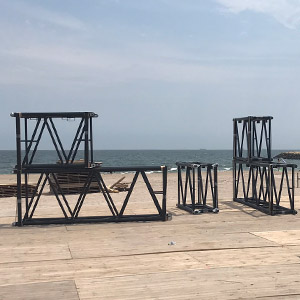
The structural argumentation of demountable structures as well as the correct and secure assembly method is written down in a so-called building book or tent book. We always strive for a security level according to the applicable codes and standards. As an alternative, we can formulate usage restrictions in case the structure cannot meet the requirements. In addition, we make an inventory of the safety measures that should be applied.

TÜV examination

Tentech has good contacts with several TÜV authorities in Germany. Providing advice and guidance to our clients during the examination process, is part of our service.

Tent books

For the Dutch market, Tentech focuses on composing Tent books, also called Building book or Baubuch. The Tent book contains all information about the structure requested by local authorities to fill out the safety plan and grant authorization. Linked to the current Eurocodes, the Tent book is able to bridge the gap between existing (expired) German, English or French tent books and the needs of the Dutch local authorities.

^